Best all-around family
GPT-5.6
Use Terra for the default route, Luna for volume, and Sol when the work becomes difficult or visual quality matters.
Top AI modelsAnalysis by Matt Farmer
The honest answer isn't one winner. It's routing each job to the model that does it best.
One release week reshaped the frontier: OpenAI moved GPT-5.6 to general availability, Anthropic restored Claude Fable 5, Meta opened a Muse Spark 1.1 API preview, and SpaceXAI released Grok 4.5. This guide compares pricing, context, benchmarks, access, privacy, speed, and practical fit.
General availability
July 9, 2026
Three routeable tiers: Sol for frontier work, Terra for balance, Luna for volume.
Restored
July 1, 2026
The premium escalation model for difficult reasoning, research, and architecture.
Public API preview
July 9, 2026
A fast, low-cost, 1M-context platform for multimodal agents and computer use.
Released
July 8, 2026
A cost-efficient coding model with native X search, web tools, and 500K context.
Fast verdict
Best all-around family
Use Terra for the default route, Luna for volume, and Sol when the work becomes difficult or visual quality matters.
Hardest problems
The raw-intelligence leader in the July 11 independent snapshot, with premium cost, latency, retention, and fallback tradeoffs.
Agent value
The cheapest output and fastest measured response in this group, built around tools, subagents, computer use, and 1M context.
Coding value
Strong engineering performance at $2 input and $6 output per million tokens, plus native X and web research tools.
Six-SKU comparison
Standard short-context API rates in USD per million tokens. Independent scores are a July 11 snapshot and are configuration-dependent.
Strongest fit
Frontier coding, agents, design, and computer use
Biggest catch
Premium price and high-effort token use
Strongest fit
Balanced default for mixed professional work
Biggest catch
Less peak quality than Sol
Strongest fit
High-volume extraction, summaries, and subagents
Biggest catch
Hard, ambiguous tasks still need escalation
Strongest fit
Hard reasoning, research, architecture, and verification
Biggest catch
Highest cost, latency, and mandatory 30-day retention
Strongest fit
Fast, inexpensive multimodal agents and computer use
Biggest catch
Public-preview maturity and lower hard-task scores
Strongest fit
Coding-agent value and live X/web research
Biggest catch
Smallest context window and separate tool fees
Find your route
Pick the workload and the thing you care about most. The recommendation gives you a default model and an escalation path.
Recommended route
Terra gives you the broad OpenAI tool stack; Grok is excellent engineering value. Route difficult debugging and visual polish to Sol.
Escalation
GPT-5.6 Sol
Main caveat
Grok has 500K context and separate tool fees; OpenAI gets more expensive above 272K input.
API cost workbench
Change the token mix and agent multiplier. The comparison applies OpenAI's long-context premium automatically when total input crosses 272,000 tokens.
Estimate only. USD standard API rates, no batch discount.
Fable cache-write charges, Grok hosted-tool fees, retries, and provider-specific minimums are not included.
Release dossiers
Official capabilities and access are separated from Matt's practical recommendation. The point is not a podium; it is knowing which role each model should play.
OpenAI
Sol / Terra / Luna
GPT-5.6 is the strongest all-around system in this comparison because it gives one tool stack three useful economic tiers. Terra is the practical default; Luna handles routine volume; Sol is the escalation path for hard coding, design, agents, and computer use.
Best fit
Watch closely
Consumer access
ChatGPT, ChatGPT Work, Codex, and a gradual global API rollout. Exact model access varies by plan and surface.
Developer route
All three tiers are available through the OpenAI API with a 1.05M context window and 128K maximum output.
Anthropic
Raw intelligence / hard problems
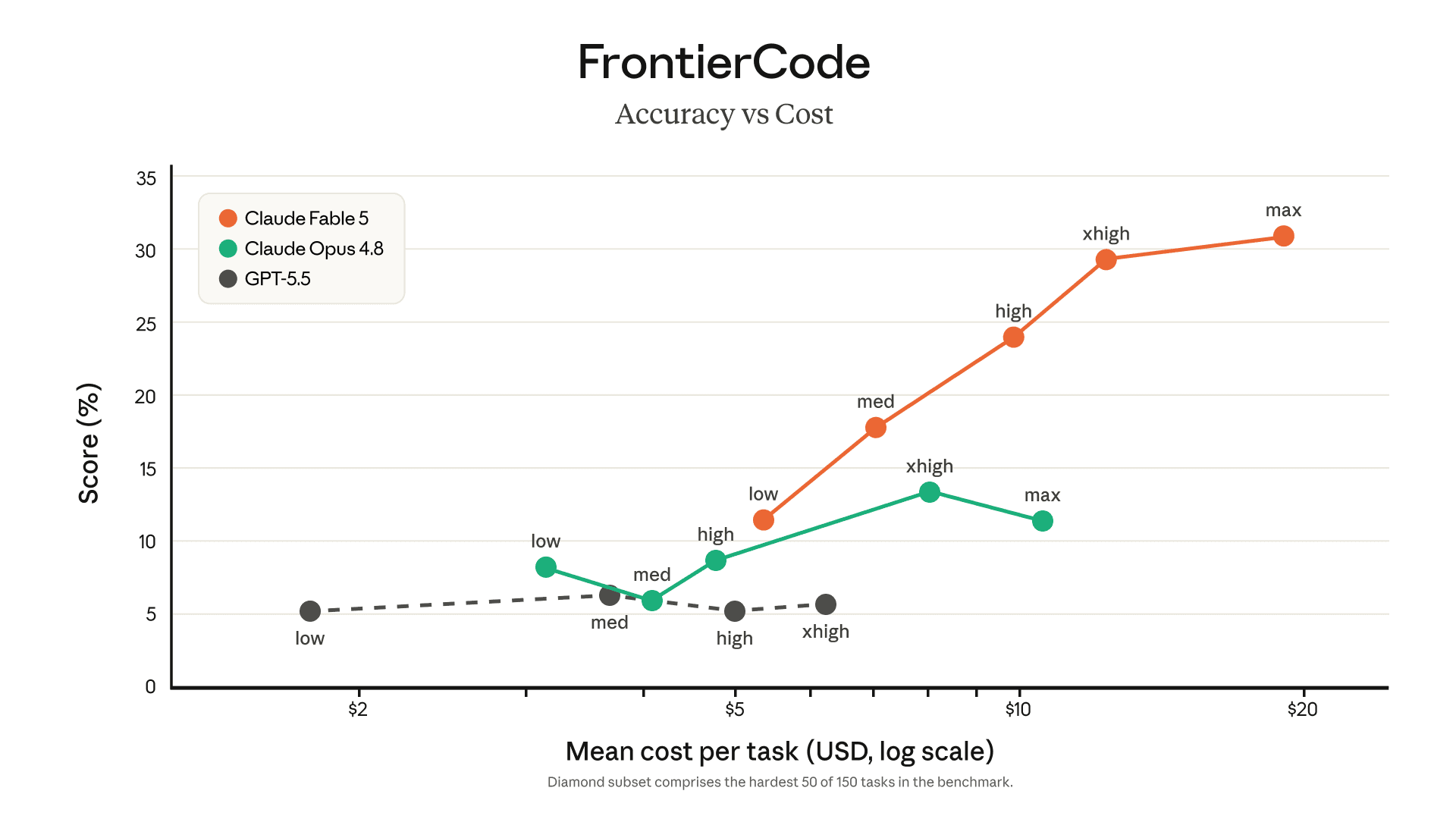
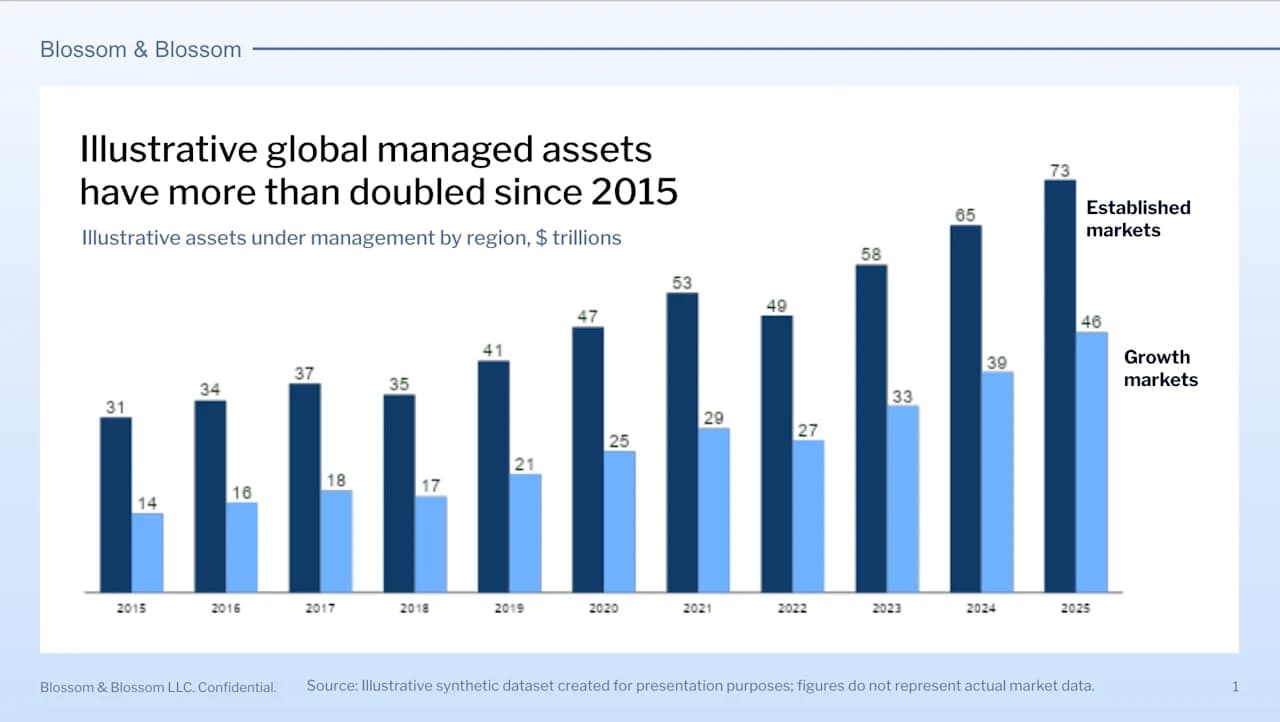
Fable 5 is the model to reserve for architecture, difficult research, deep writing, hard debugging, and independent verification. It led the July 11 Artificial Analysis intelligence snapshot, but the economic and privacy tradeoffs are substantial.
Best fit
Watch closely
Consumer access
Fable is globally restored. Temporary subscription inclusion ended July 7; ongoing use may consume plan limits or usage credits.
Developer route
The API supports 1M context, caching, batch discounts, and adaptive effort, with provider-specific retention and fallback rules.
Meta
Speed / price / multimodal agents
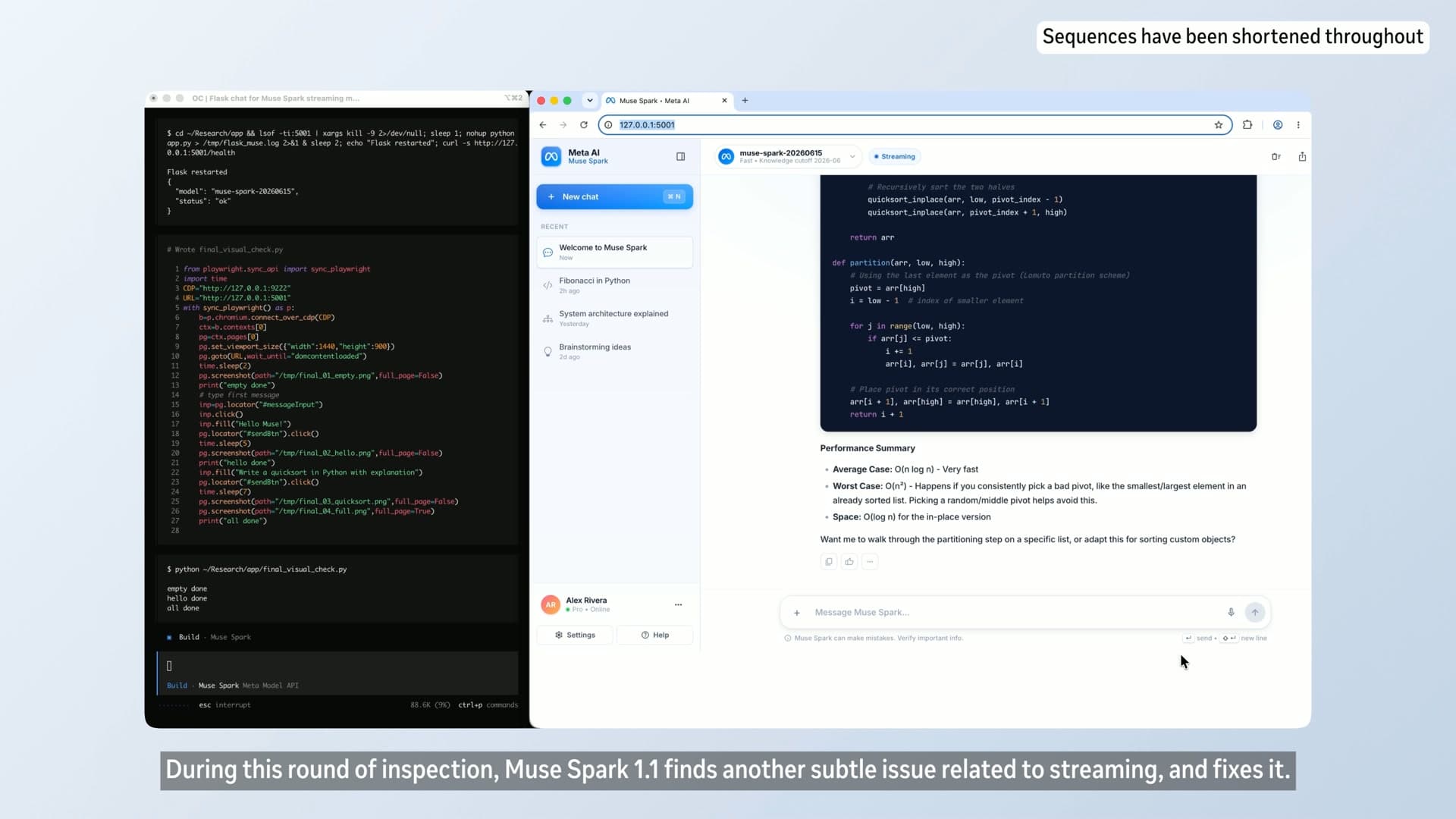
Muse Spark 1.1 is the most interesting value experiment of the release wave: 1M context, explicit tool and subagent design, computer use, and the lowest output price in the comparison. It is not the raw benchmark leader, and the developer API is still a public preview.
Best fit
Watch closely
Consumer access
Muse Spark 1.1 is available in Meta AI Thinking mode, with a US-focused public preview of the paid Meta Model API.
Developer route
The developer API is OpenAI-compatible and priced at $1.25 input, $0.15 cached input, and $4.25 output per million tokens.
SpaceXAI
Engineering / live X / tool use
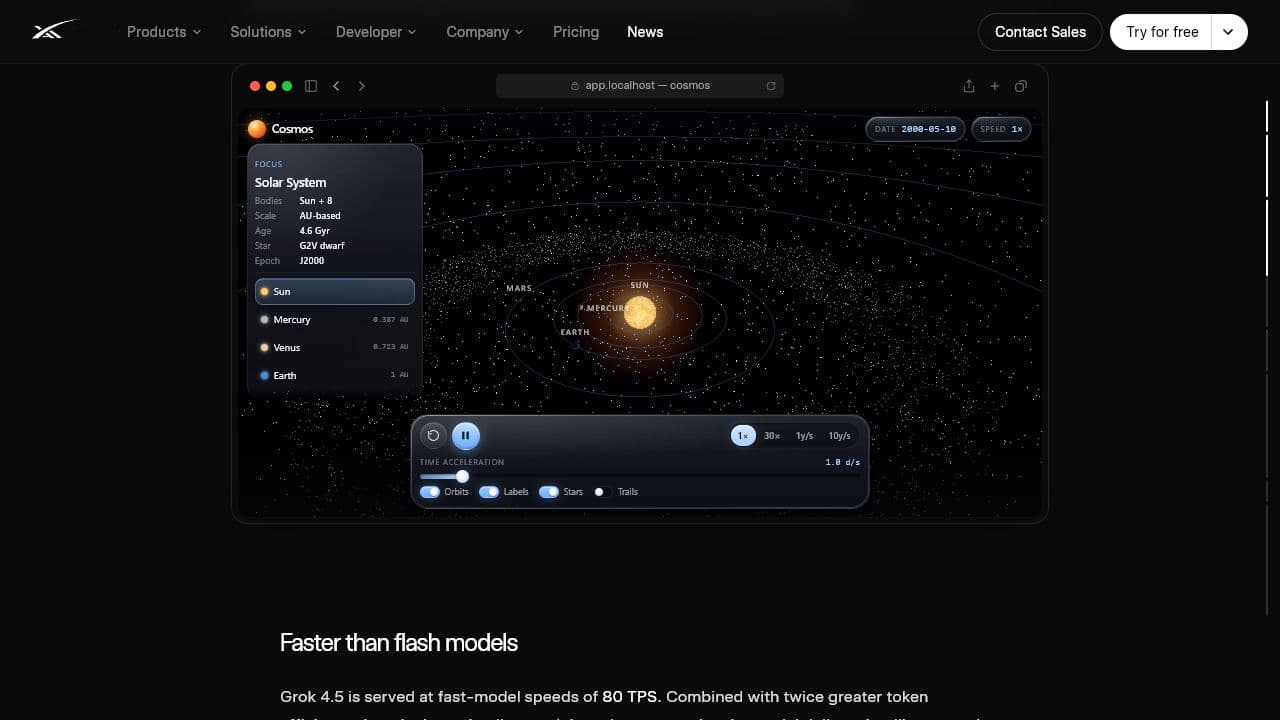
Grok 4.5 makes its strongest case on engineering economics: competitive coding-agent performance, low output cost, fast throughput, and native X/web tools. It is a practical implementation model, not the universal raw-intelligence winner.
Best fit
Watch closely
Consumer access
Available through Grok, Grok Build, Cursor, and the xAI API. Consumer limits and regional access vary.
Developer route
The API costs $2 input, $0.50 cached input, and $6 output per million tokens, with separate hosted-tool fees.
Independent snapshot
Artificial Analysis v4.1, captured July 11, 2026. These configurations use different effort settings and hidden reasoning behavior. Treat this as a dated snapshot, not a permanent ranking or latency promise.
Higher is better
Tokens per second
max + fallback
Claude Fable 5
81.99s
Time to first token / answer
max
GPT-5.6 Sol
229.07s
Time to first token / answer
high
Grok 4.5
15.22s
Time to first token / answer
xhigh
Muse Spark 1.1
1.03s
Time to first token / answer
Access + controls
Plans, usage credits, developer regions, privacy controls, and model availability differ. Confirm the exact surface before designing a production workflow around it.
Recommended stacks
Routing stack
Find live signal with Grok, organize sources cheaply with Luna or Muse, then use Sol or Fable for synthesis and final verification.
Routing stack
Implement with the balanced models, hand repetitive subagents to the value tier, and escalate difficult debugging or architecture.
Routing stack
Default to the lowest sustainable cost, route tool-heavy engineering to Grok, and reserve Sol for low-confidence or high-complexity branches.
Method + sources
Official product pages establish dates, prices, access, and specifications. Artificial Analysis provides the independent snapshot. Use-case recommendations are Matt Farmer's editorial synthesis.
Quick answers
Question 01
GPT-5.6 is the best all-around family in this comparison because Sol, Terra, and Luna create a practical quality-to-cost routing ladder. Claude Fable 5 is the strongest escalation choice for the hardest reasoning tasks.
Question 02
Muse Spark 1.1 has the lowest output price in this group at $4.25 per million tokens. GPT-5.6 Luna has the lowest uncached input price at $1 per million tokens. Real cost also depends on reasoning tokens, retries, caching, tools, and agent fan-out.
Question 03
Grok 4.5 is the strongest coding-agent value option, while GPT-5.6 Sol is the premium all-around coding and design choice. Terra is a sensible default route for professional development work.
Question 04
No. All of the models compared on this page are proprietary services and none offers an open-weight local deployment path.
Work with Matt
Book a strategy hour with Matt to map the models, tools, costs, and routing approach that fit your business or workflow. You will leave with a practical next move, not another benchmark spreadsheet.